

What materials are beach flags made of?
Dec 24, 2025
Leave a message
Beach flags are iconic fixtures along the coastline, serving multiple purposes from advertising and signaling to adding a pop of color to the beach environment. As a leading beach flag supplier, I've had the privilege of exploring various materials used in their construction. In this blog post, I'll delve into the different types of materials commonly used to make beach flags, their characteristics, advantages, and disadvantages.
Polyester
Polyester is one of the most widely used materials for beach flags. It is a synthetic fabric known for its durability, resistance to fading, and ability to withstand harsh outdoor conditions. Polyester beach flags are often made from a high - thread count fabric, which gives them a smooth and vibrant appearance.
One of the key advantages of polyester is its colorfastness. The dyes used in polyester fabrics are designed to resist fading from prolonged exposure to sunlight, ensuring that the beach flag retains its bright and vivid colors for an extended period. This makes it an ideal choice for advertising purposes, as the flag can effectively convey the intended message without losing its visual appeal.
Polyester is also highly resistant to water and mildew. When exposed to the elements, it dries quickly, reducing the risk of mold and mildew growth. This is particularly important for beach flags, which are constantly exposed to moisture from the ocean and rain. Additionally, polyester is relatively lightweight, making it easy to fly in the wind and reducing the stress on the flagpole.
However, polyester does have some drawbacks. It can be prone to static buildup, especially in dry conditions. This can cause the flag to cling to itself or other objects, which may affect its appearance. Also, while it is durable, polyester can become brittle over time with repeated exposure to extreme temperatures and UV radiation.
Nylon
Nylon is another popular material for beach flags. It is a strong, lightweight synthetic fiber that offers excellent strength - to - weight ratio. Nylon beach flags are known for their ability to fly well in the wind, even in relatively low - wind conditions.
One of the main advantages of nylon is its high tensile strength. This means that nylon flags can withstand strong winds without tearing or fraying easily. It is also very flexible, allowing the flag to move freely in the breeze and creating an eye - catching visual effect.
Nylon is resistant to abrasion, which is important for beach flags that may be exposed to sand and other rough surfaces. It is also quick - drying, similar to polyester, which helps prevent the growth of mold and mildew.
On the downside, nylon is more prone to fading compared to polyester. The dyes used in nylon fabrics may break down more quickly when exposed to sunlight, resulting in a loss of color over time. Additionally, nylon can be more expensive than polyester, which may be a consideration for some customers.
Cotton
Cotton is a natural fiber that has been used for making flags for centuries. Cotton beach flags have a classic and rustic look that can add a touch of charm to the beach environment.
Cotton is a breathable material, which means that it allows air to circulate through the fabric. This can be beneficial in hot and humid beach conditions, as it helps prevent the flag from feeling heavy and sticky. Cotton also has a soft and natural feel, which can be appealing to the eye.

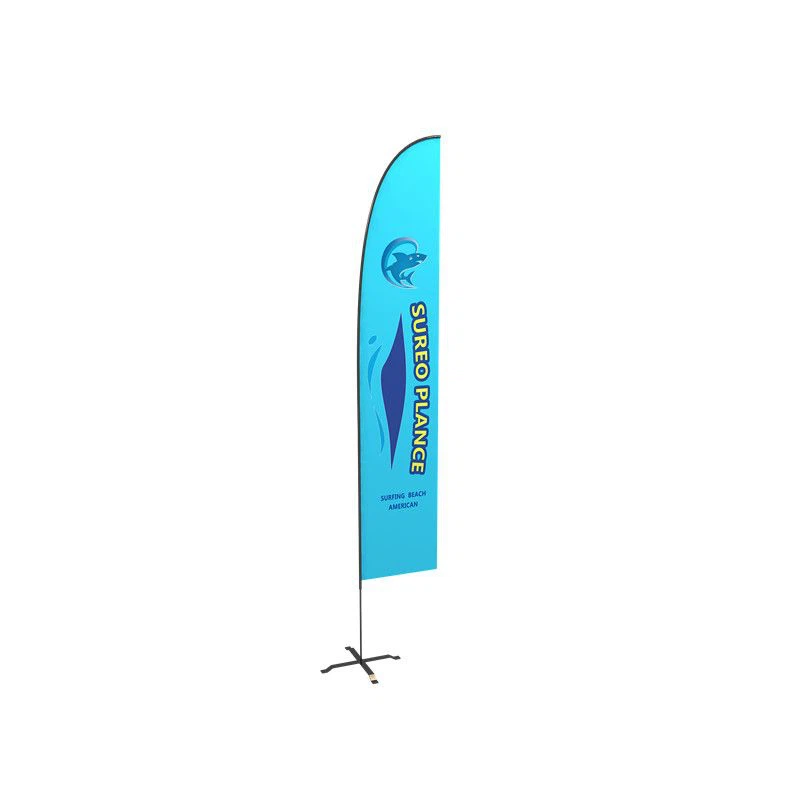
Another advantage of cotton is its ease of printing. The natural fibers of cotton can absorb ink well, resulting in high - quality prints with sharp and vibrant colors. This makes cotton a popular choice for custom - printed beach flags.
However, cotton has some limitations. It is less durable than synthetic materials like polyester and nylon. Cotton flags are more prone to tearing and fraying, especially when exposed to strong winds and rough handling. They also absorb water more readily than synthetic materials, which means they take longer to dry and are more susceptible to mold and mildew growth.
Mesh
Mesh is a relatively new material used in the production of beach flags. It is a lightweight, breathable fabric with a porous structure. Mesh beach flags are designed to allow wind to pass through them easily, reducing the drag on the flagpole.
One of the main advantages of mesh is its wind - resistance. Because the wind can pass through the holes in the fabric, mesh flags are less likely to be damaged by strong winds. This makes them a great option for areas with high wind speeds, such as coastal areas.
Mesh is also highly visible. The porous structure of the fabric allows for a unique visual effect, where the flag appears to float in the wind. This can make the flag stand out even from a distance.
However, mesh flags may not be as suitable for detailed prints as solid - colored fabrics. The holes in the mesh can cause the printed image to appear less sharp, and some of the fine details may be lost.
Feather Beach Flag
If you're looking for a unique and eye - catching beach flag option, check out our Feather Beach Flag. These flags are typically made from a combination of lightweight and durable materials, designed to flutter gracefully in the wind and create a dynamic visual effect.
When choosing the material for a beach flag, it's important to consider the specific needs and requirements of the customer. For long - term outdoor advertising, polyester or nylon may be the best choice due to their durability and resistance to fading. For a more rustic or traditional look, cotton could be a good option. And for areas with high wind speeds, mesh flags offer an excellent solution.
As a beach flag supplier, I'm dedicated to providing high - quality flags made from the best materials available. Whether you're looking for a simple solid - colored flag or a custom - printed design, we have a wide range of options to meet your needs. If you're interested in purchasing beach flags, I encourage you to contact us to discuss your requirements. We can offer guidance on the best material for your specific application and help you create a flag that stands out.
References
- "Textile Materials: Properties and Performance" by David J. Vaughn
- "Outdoor Fabric Guide" published by the American Textile Manufacturers Institute
- Industry reports on beach flag manufacturing and materials trends